

What will music and arts schools need in the years ahead? At SpeedAdmin’s 20th Anniversary Seminar in Sønderborg, we invited voices from across the Nordic sector to explore technology, participation, data, leadership – and what may be too valuable to change.
When we gathered customers, colleagues and guests in Sønderborg on 25 August, we could have spent the morning looking back on 20 years of SpeedAdmin. We chose to spend surprisingly little time on the past.
Instead, the theme was Music and Art Schools in Transition.
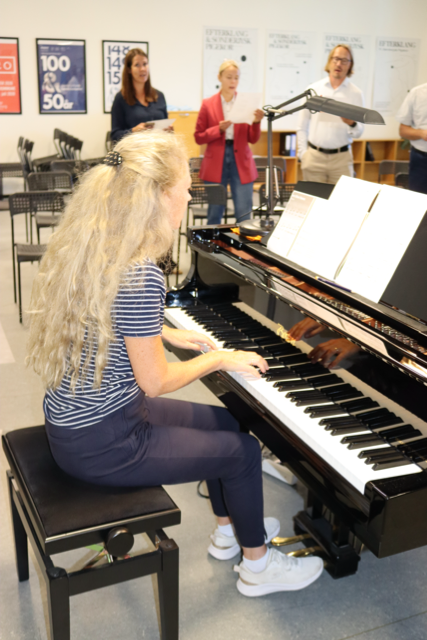
After a welcome from SpeedAdmin founders Torben and Karsten and a musical opening by Mette Rasmussen from Det Sønderjyske Sangcenter, the morning moved through perspectives from Norway and Sweden, technology, data and leadership, before ending in an open conversation between the speakers and the audience.
The starting point was quite simple: music and arts education is changing. Technology is changing. Young people are changing. The expectations of parents, teachers, administrators and public institutions are changing. Where does that leave the music and arts school?
We didn't expect to find one answer and we didn't. But we did find some very good questions.
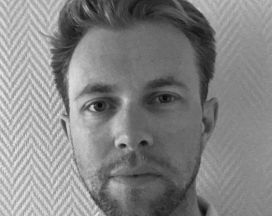
In Norway, around 10% of children and young people participate in organised cultural activities in their spare time, including schools of arts. At the same time, 86% are gaming. Socio-economic background also has a significant influence on who participates in organised cultural activities.
It would be easy to turn that into another discussion about screen time. Jens's point was more interesting than that.
If this is where an enormous part of young people's culture, creativity and social life is already taking place, what should arts education learn from it?
The Norwegian response is not simply to move traditional teaching onto a screen. Jens showed examples of arts schools taking a more active role in community development, Oslo's work with technology-based disciplines and video games, and the national MishMash Centre for AI and Creativity, where arts education is part of the conversation about emerging technology rather than standing outside it.
That distinction became important throughout the morning:
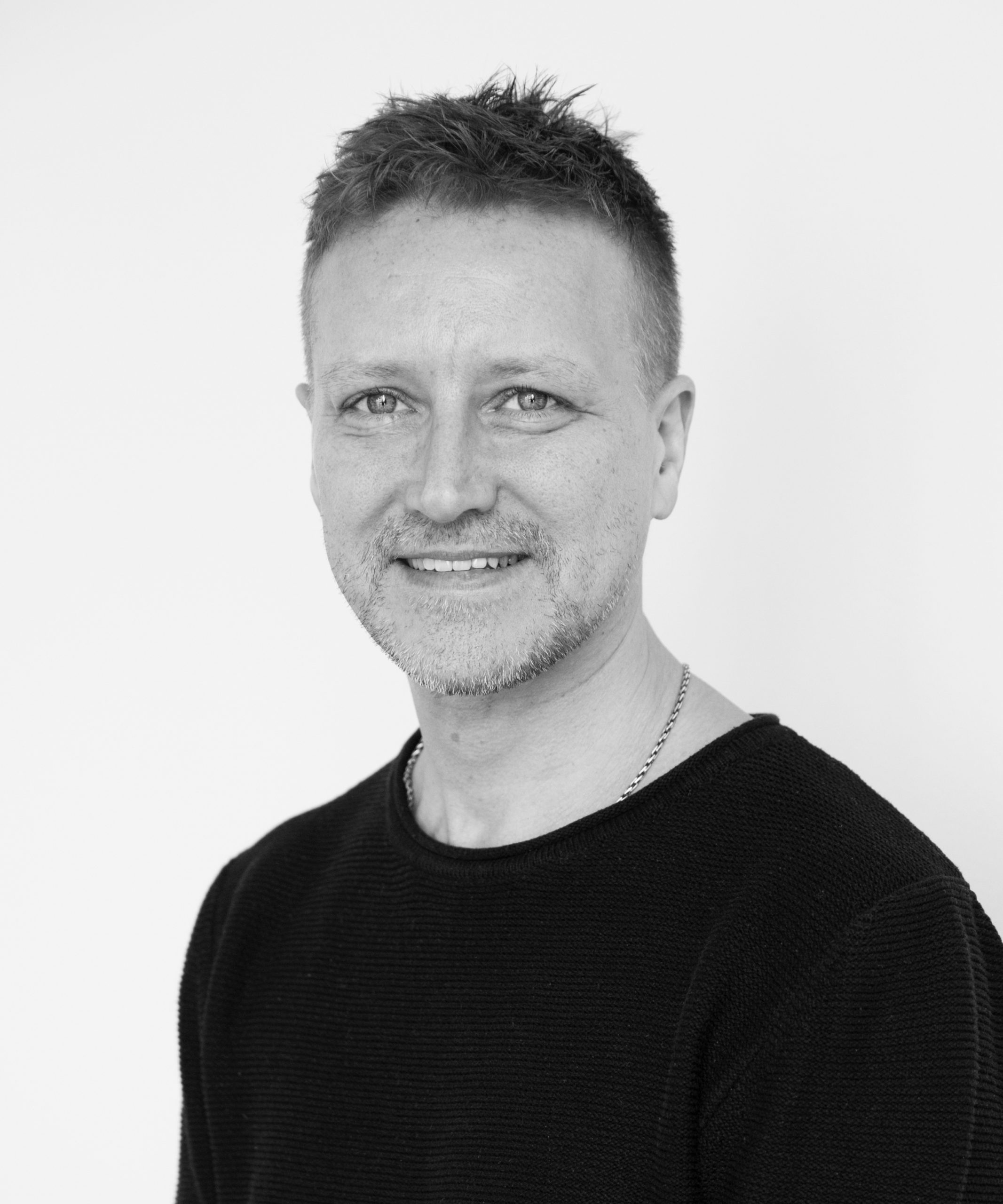
Torgny Sandgrem Secretary General of Kulturskolerådet in Sweden, brought a different system but some remarkably familiar questions.
Sweden has almost 290 local municipal arts-school operations rather than one national model. That local responsibility has created diversity, innovation and strong local ownership. But it also means that a child's opportunities can depend heavily on geography and local priorities.
The question Torgny put to the room was therefore a difficult one: How do we combine local responsibility with equal opportunities for all children?
Swedish arts schools are dealing with three pressures at the same time:
One response has been greater cooperation between municipalities. Another has been digital teaching.
But here, too, the interesting part was the thinking behind the technology. In a Swedish distance-teaching pilot, the starting point was pedagogy rather than technology. Existing tools were used. Digital teaching complemented local activities instead of replacing them, giving students access to expertise that was not available locally.
The lesson was beautifully simple:
That thought would return later in the day.
After a lot of policy, demographic change, financing and structural challenges, it was time for what we had described in the programme as a small "sorbet from the young generation". This turned out to be quite literal.
SpeedAdmin developer Niklas Braun took us through the history and possibilities of RFID technology while involving both the audience and the ice creams they had just been served.
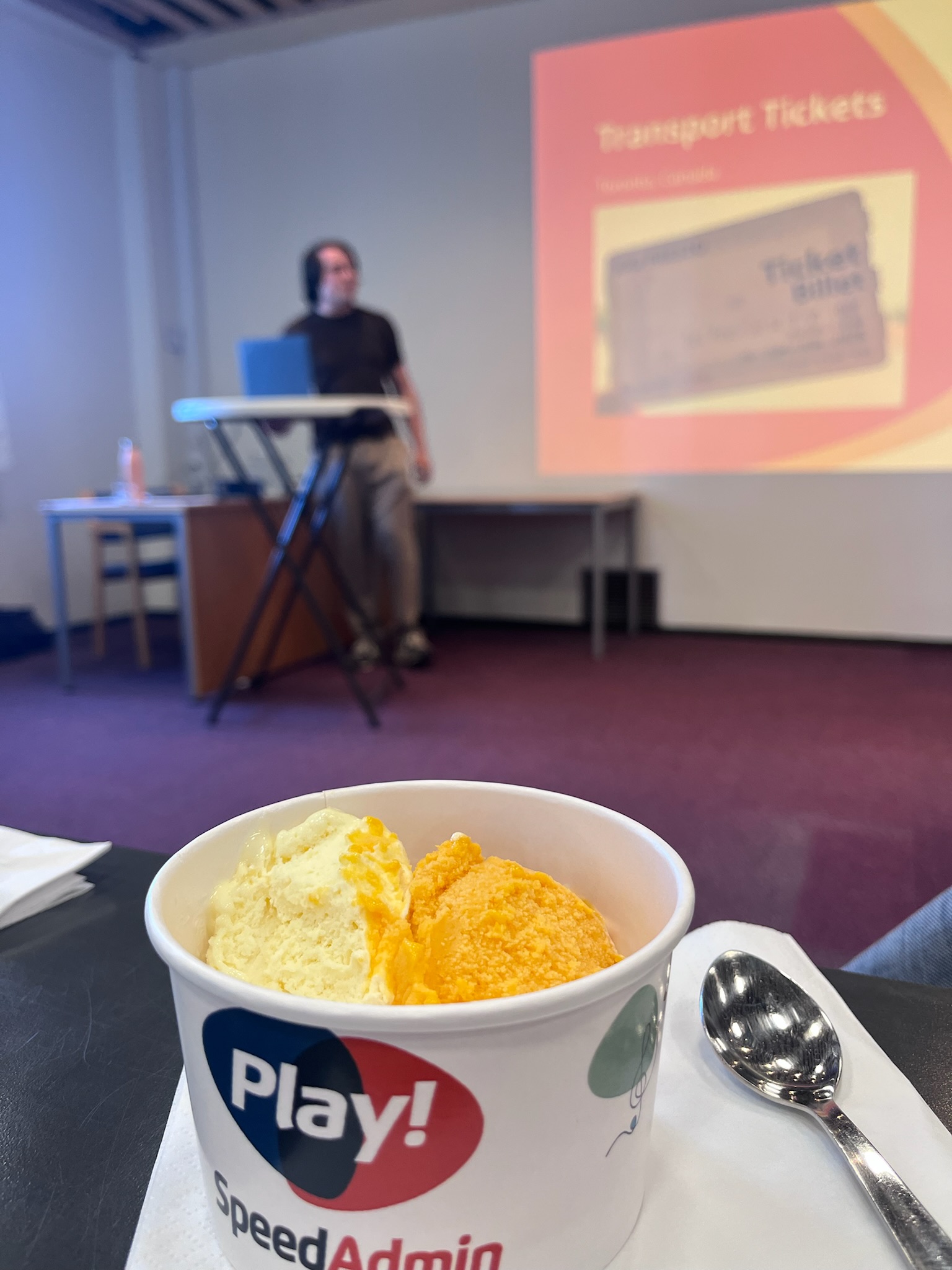
Behind the fun was a very practical idea.
What if registering an instrument, finding out who currently has it or taking stock of an equipment room did not require lists, spreadsheets and manual typing? What if some of those tiny administrative tasks that take a few minutes each could instead take seconds?
Niklas demonstrated how RFID can be used for instrument and inventory management – including registering equipment simply by moving through a room rather than handling every individual item manually.
It was a useful change of perspective. Digitalisation does not always have to mean a giant transformation project or an AI strategy.
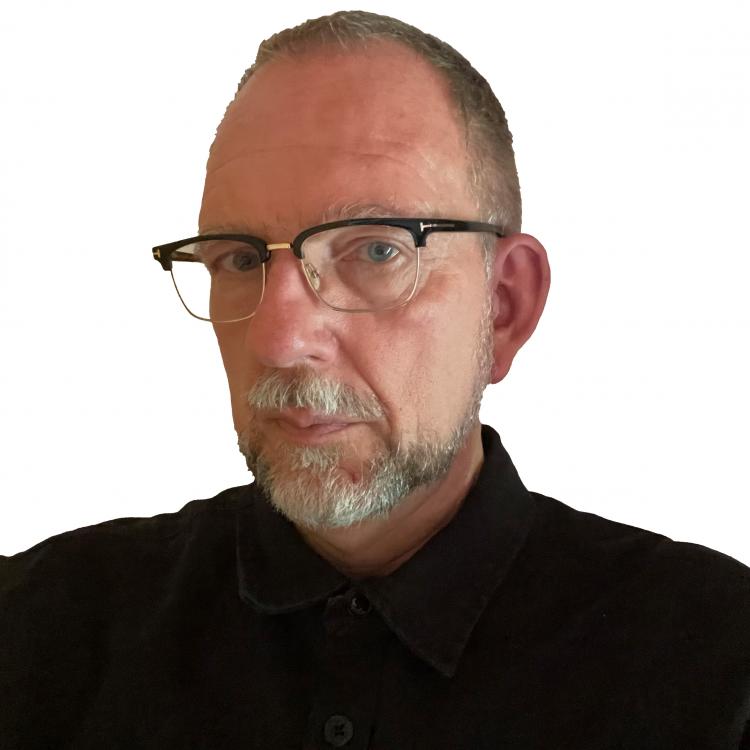
Then came Søren Friis Møller, Programme Director for Research and Competence Development at Danish Music and Arts Schools and lecturer at Copenhagen Business School, to talk about data and leadership.
And Søren's starting questions were deceptively straightforward:
What do we actually know about our sector? What might we be overlooking? And how can better use of data help us make stronger decisions and demonstrate impact?
The Danish figures provided an interesting example. Around 64,000 pupils are individually registered in music and culture schools, while a much larger number are reached through collaborations and shorter activities. Even when those broader activities are included, however, a very large proportion of children and young people are still outside the reach of the sector.
And those young people are certainly not waiting around with nothing else competing for their attention. Søren pointed to children spending around two hours and forty minutes a day on social media and argued that cultural participation is closely connected to identity: young people are continuously deciding where they belong and what they want to be part of.
That makes knowing your audience rather important.
But Søren's message was not simply "collect more data".
In fact, one of his most useful pieces of advice was the opposite:
Instead, he suggested five steps:
Most importantly, move beyond saying, "We know it works." A much stronger question is:
For music and arts schools increasingly being asked to demonstrate their wider contribution to education, wellbeing, inclusion and communities, that difference matters.
By the time Jens, Torgny and Søren sat down for the final panel discussion, it felt wrong to have a traditional panel with an audience politely watching from their chairs. So it became much more of a fireside conversation. And the audience very quickly became part of it.
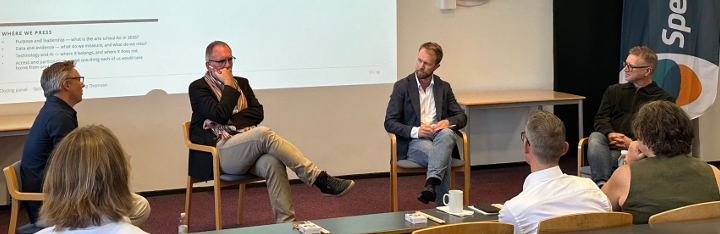
The discussion moved between technology and AI, teacher recruitment, resources, access, financing and the changing expectations of young people. But one of the most interesting threads was actually about what should not change.
Someone raised the importance of the physical environment. Welcoming buildings, places where young people enjoy spending time, and schools that feel accessible can matter just as much as another digital solution.
We also came back repeatedly to something very distinctive about music education: the relationship between an individual student and a highly specialised teacher.
That one-to-one attention can be extraordinarily valuable. It is also resource-intensive.
AI and technology may be part of the answer. New teaching formats may be part of it. Cooperation may be part of it.
But the conversation suggested that progress should not be measured by how much technology we manage to introduce.
The better question is whether technology helps us create more access, stronger relationships, better teaching and more time for the things that humans are particularly good at.
We began the seminar by saying that the people in the room were not simply an audience. Their experiences, disagreements and ideas were part of the programme.
That turned out to be true.
Nobody left Sønderborg with a blueprint for the music and arts school of 2035. We left with questions:
We also left with a reminder that many challenges are shared across the countries, even when the structures, legislation and funding behind them look very different. That seems like a worthwhile way to celebrate 20 years.
That seems like a worthwhile way to celebrate 20 years.
An anniversary is a good opportunity to appreciate the journey behind us. But the most interesting conversations are probably the ones about what comes next.
As we said at the beginning of the seminar:
Don't just sit back and enjoy the concert. You're part of the band.